
Technology evolves and user needs change. At the same time, competition in search results intensifies and a company’s own offering develops. For this reason, a website redesign becomes relevant sooner or later for almost every business.
The most important goal of a redesign is not just a new appearance, but a better user experience and a website whose effectiveness can be measured. If a site is slow, unclear, or difficult to use, the visitor will not wait. Speed, clarity and reliability directly affect whether inquiries and sales are generated.
In this article I will go through when a website redesign makes sense, what search engines require, and what should be considered when rebuilding a site professionally into a hand-coded implementation.
When is a website redesign relevant?
There is no single correct schedule. A redesign becomes relevant when the current site no longer serves business goals.
Typical signs include for example:
- The site feels slow or “sluggish”, and this is reflected in inquiries and sales. You can read more about the importance of speed in the article Why is a fast website a critical factor for business?
- Search visibility declines or organic traffic does not grow even though the company invests in marketing.
- The structure does not match the current offering: services have changed, expanded, or the target group has become more defined.
- The site looks outdated and trust suffers at first glance.
- The technical foundation limits development: even small changes are slow, expensive or risky.
A good rule of thumb is this: if the site feels more like a burden than a tool that supports sales, redesign should be prioritized.
Website redesign from the perspective of search engines
Many companies acquire new customers through search engines. Therefore the redesign must be done so that search engines understand the structure and users find the content.
Important note: a redesign can affect search visibility even if the content is not “actually” changed. Site structure, internal linking, headings, technical performance and URL paths all practically affect how content is indexed and how the website ranks in search engines.
For this reason a website redesign is not only a design project, but also an SEO project.
If you want to develop visibility systematically, explore Waahtera’s SEO service.
SEO in a redesign: content and technology go together
Search engine optimization is a whole where content, structure and technical implementation support each other.
In internal optimization (on-page) we ensure for example:
- clear site structure and logical navigation
- headings, metadata and internal linking
- page-specific search intent: what does the user want to find with this query?
- speed and technical quality
External optimization (off-page) relates to how the site is “recommended” on the web, for example quality mentions and links. When the site looks trustworthy and the content is genuinely useful, external optimization also becomes smoother.
If the keyword side is unclear, start from the basics: Keyword research in practice
What should be considered in a website redesign?
It is easy to focus only on appearance. Real results come from planning the whole according to business goals and the user’s decision-making process.
1. Analysis of the starting situation before decision-making
Before planning, the current site must be understood: what works, what does not and why.
In practice, evaluate for example:
- loading speed and usability on different devices
- page structure and discoverability
- key content and its role (services, references, contact)
- technical deficiencies that slow development or weaken visibility
2. Competitor comparison: what does the market expect?
The goal is not to copy competitors, but to understand the level users are accustomed to.
It is useful to review for example:
- how competitors present their services and pricing
- what kind of content structure supports sales
- which themes competitors rank for
- how fast competitor sites perform on mobile
3. User first: the site is designed to support visitor decision-making
The company’s own preferences must not guide too much. The user wants quickly to:
- understand what the company does
- see why it is a trustworthy choice
- find the next step (contact, quote request, booking)
When this works, the site serves both the user and the business.
4. Mobile first and responsiveness without compromises
The majority of traffic is mobile. The mobile experience must be designed as primary, not a “shrunk desktop”.
Good responsiveness means:
- clear typography and sufficiently large buttons
- fast loading even on weak connections
- simple navigation and low friction in contacting
5. New technical foundation: performance, security and longevity
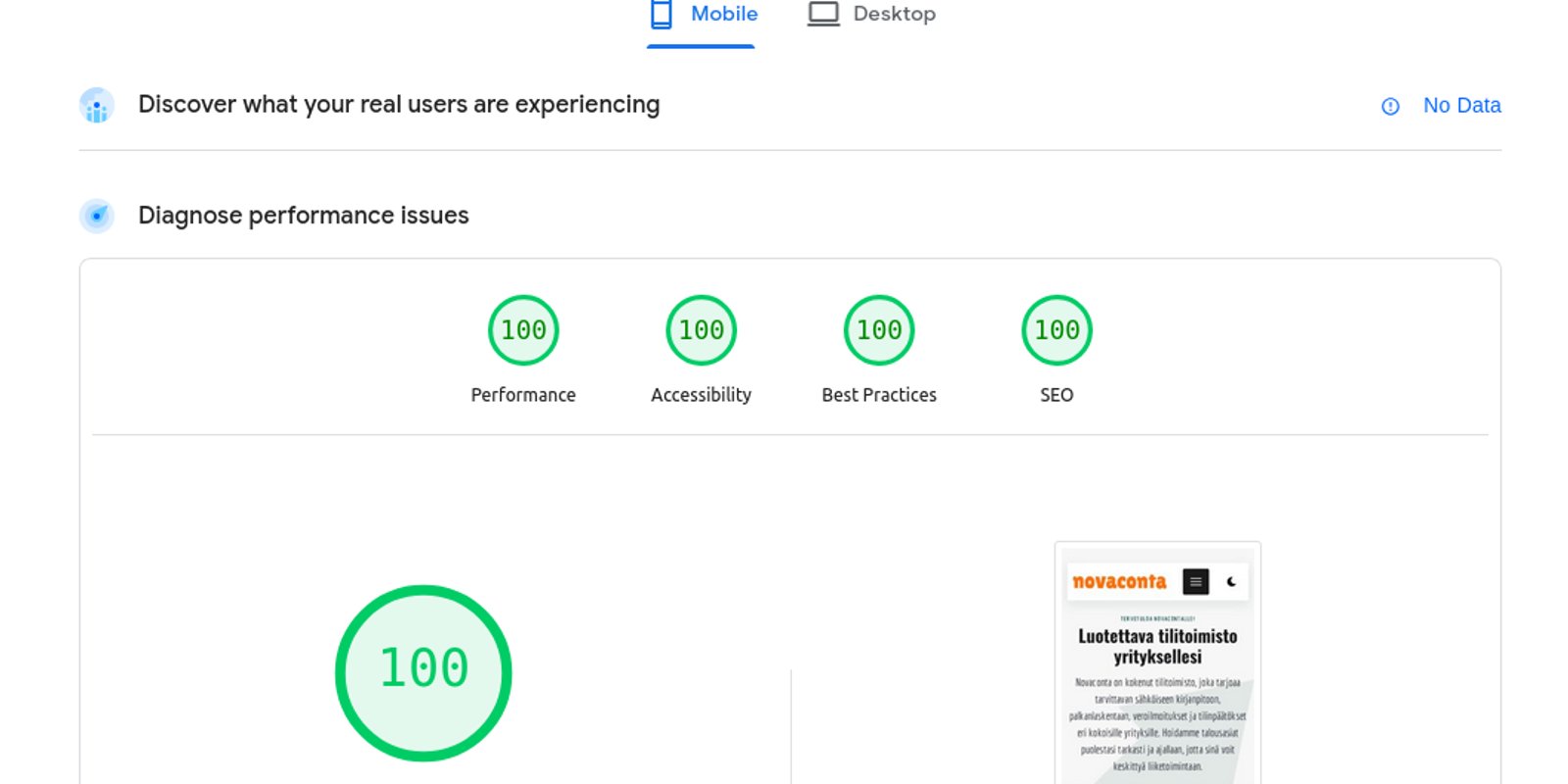
Waahtera’s way of implementing redesigns is based on a hand-coded, lightweight and controllable solution that reduces unnecessary load, improves loading speed and makes the site easier to maintain.
If the redesign also involves a site transfer (hosting, domain, email, analytics, redirects), these should be planned as carefully as the site itself. Especially management of old URLs and redirects is critical so visibility does not drop.
You can read more about Waahtera’s implementation and development services here: Web development and Web design
Summary
A website redesign is a business project, not just a visual update. When done professionally, the result is a site that:
- loads quickly
- works excellently on mobile
- supports search visibility
- guides visitors to make contact
If you want to renew your site so it performs better and lasts over time, contact Waahtera. Contact details can be found here:
Read more
Read about our client’s website redesign: