
What is Core Web Vitals?
Core Web Vitals is Google’s way of measuring the real user experience of a website. It does not only measure whether a page loads, but also how quickly the main content appears, how fast the page responds to interaction, and whether the layout stays stable while loading.
If a business website is aiming for stronger visibility, better landing pages and more leads, Core Web Vitals is a core part of technical search engine optimization.
The three most important metrics
LCP measures how quickly the main content loads
Largest Contentful Paint, or LCP, measures how fast the most important visible element on the page appears. In practice this is often a large heading, hero image or another key piece of content near the top of the page.
Poor LCP is usually caused by oversized images, slow server response times, or too much render-blocking CSS and JavaScript.
INP measures responsiveness
Interaction to Next Paint, or INP, measures how quickly the page responds when a user clicks a button or opens a menu. If the browser has to process too much JavaScript before it can update the screen, the site feels slow even if it already looks loaded.
This is one reason why lightweight hand-coded web development often performs better than heavy site builders and prebuilt platforms.
CLS measures visual stability
Cumulative Layout Shift, or CLS, tracks whether elements jump around while the page is loading. Poor CLS shows up when text, buttons or images shift at the moment the user is trying to read or click.
This often happens when images, fonts or embeds are loaded without reserving space for them first.
Why does Core Web Vitals matter for SEO?
Core Web Vitals does not determine rankings on its own, but it supports overall site quality. Google wants to surface pages that match search intent and also provide a strong user experience.
When a page is fast and stable:
- users stay longer on the site
- content is easier to consume
- the conversion path is less likely to break
- search engines get stronger quality signals
This also connects directly to broader website performance. If you have not read the wider perspective yet, continue with our article on why website speed is critical for business results.
The most common causes of weak scores
The same issues appear again and again on business websites:
- hero images are too large or poorly formatted
- too much unnecessary JavaScript is loaded
- fonts and third-party scripts add too much overhead
- mobile performance gets too little testing
- content blocks and images load without reserved dimensions
The same pattern often appears when a website is built on a heavy platform. That is also why we wrote about why hand-coded websites often beat website builders.
How can Core Web Vitals be improved?
The most effective improvements are usually practical and concrete:
1. Optimize key images
Above-the-fold images often directly affect LCP. Using correct dimensions, modern image formats and a sensible loading strategy can make a major difference.
2. Reduce unnecessary JavaScript
If every animation, form and navigation component introduces a large script bundle, INP quickly suffers. In many cases the best fix is to simplify the implementation.
3. Reserve space for important elements
Images, embeds and dynamic content should have predefined dimensions or structure so CLS stays under control.
4. Use a CDN
When static assets are delivered from a location closer to the user, response times improve. This is especially useful for mobile traffic and broader geographic reach. Read more in our CDN article.
How should results be monitored?
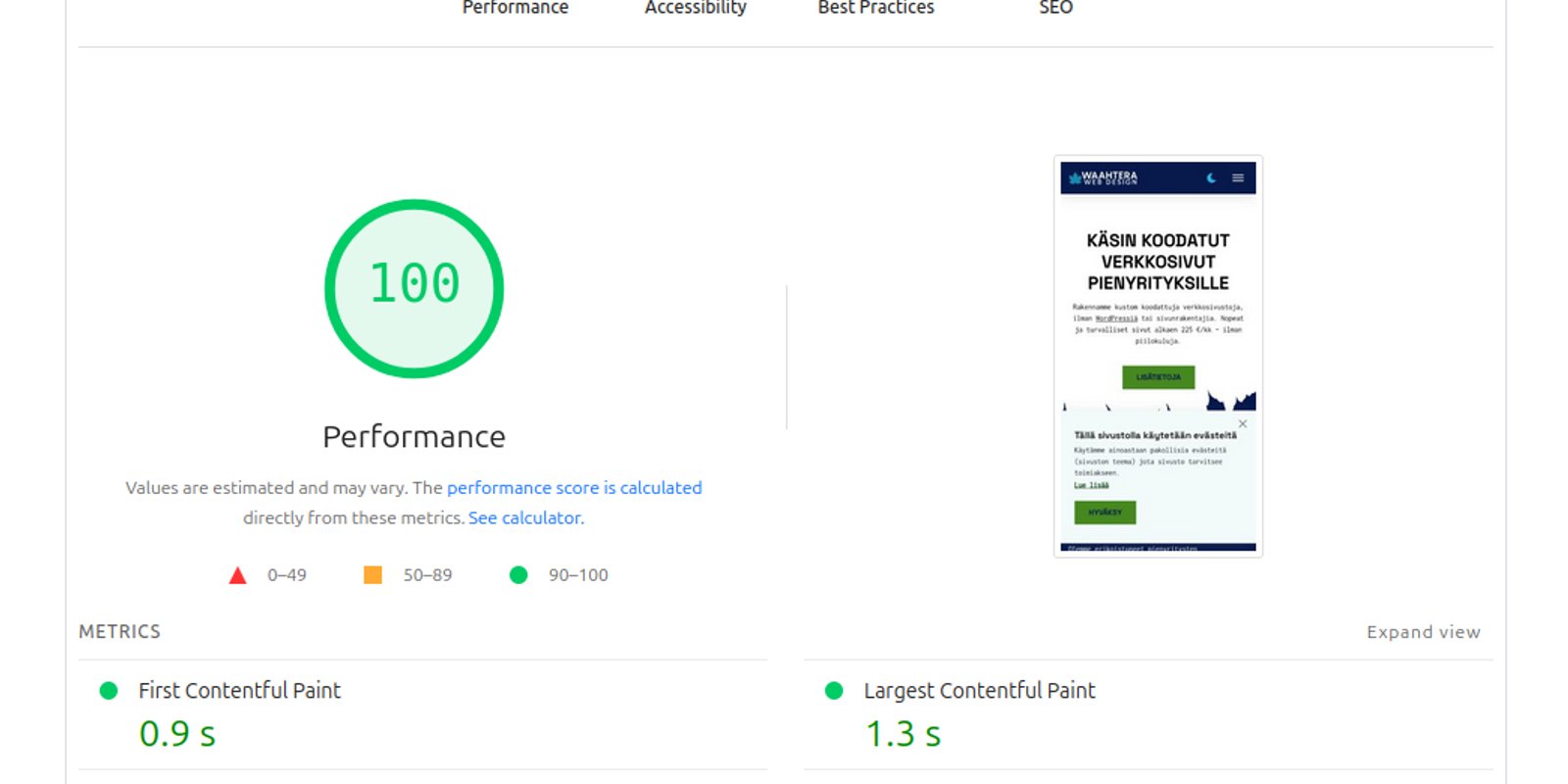
Core Web Vitals should be monitored with both lab testing and real-user data. A single PageSpeed test does not always tell the full story, but it is useful for finding technical bottlenecks.
The real goal is not a perfect score. The goal is consistent performance for real users across real devices.
Summary
Core Web Vitals connects technical performance, user experience and SEO. When a site loads quickly, reacts without delay and stays visually stable, both users and search engines benefit.
If you want to strengthen your site’s technical foundation, explore our SEO service and web development service.